The liberalization of the airline industry in Europe in the mid-90 caused two effects: firstly, the traditional companies (British Airways, Air France, Alitalia, KLM, Iberia ...) is not competed yes, respecting other markets, on the other, using deregulation, new companies emerged that gained market share at first by the low price of their tickets. This really has caused major changes in the major airlines that have had to carry out restructuring, promotion, price reduction ... In addition, at the national level should take into account the expansion of the Barajas airport and El Prat airport opening Don Quixote in Ciudad Real and expanding the network of high speed trains, many variables to be considered for (...) With the same problem the following review aims to provide an overview of the new situation.
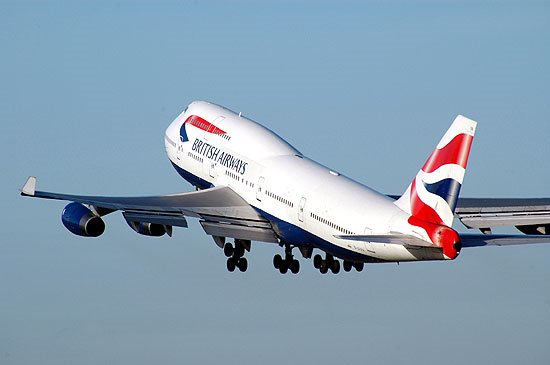 Iberia and British Airways that three years ago they had announced an alliance of large joint projects have revealed the freezing of this idea, arguing that the companies should concentrate their efforts on restructuring processes in which are immersed. Offensive to the low cost airlines and rising oil prices have opted to slow down the process, considering that "before shaking the agreement, each company must be stronger," as stated Jordi Porcel, head of BA in Spain and Portugal.
 The idea was to expand the flight characteristics of the Madrid-Barcelona-London London (Code-sharing, joint management and revenue sharing and benefits) to other lines. But the emergence of low cost airlines, is causing a radical transformation in the sector, putting in trouble incumbents and forcing them to make strategic plans. The Master Plan for Iberia, which ends in 2008, aims to improve operating margin by 600 million euros, while the business plan for British Airways plans to save 651 million euros and goes through 4 basic objectives: 1) investing 589 million euros to modernize the Club World Business Class (business class) and deslazarse at Heathrow's Terminal 5 2 º) to reduce 600 jobs managerial positions (35% of them) so to save 73 million euros a year. 3 º) renaming the subsidiary British Airways CitiExpress under the name of BA Connect to compete more aggressively with low-cost carriers 4 º) delaying the retirement age for pilots 5 years, reaching 60 to thereby reduce the deficit of 2,000 million euros of corporate pension plan, delaying the retirement of the crew from age 55 to 65 and the ground staff of the current 60 to 65. It also aims to limit annual growth to 2.5% pension
 Vueling is a Catalan company of low cost who settled in the market in 2004 to offer flights with a top-flight service, besides being the first to assign seats via the Internet, an option taken by 70% of passengers (96 % as the CEO of the entity). Its main gimmick is the fleet of aircraft, A-320, which consume 30% less fuel. With an initial investment of 30 million euros and a capital increase by the same amount of revenues of 136 million euros in 2005, over 20 million above its estimates and 6 times more than the results obtained in 2004. According to the Secretary of State, Ministry of Tourism and Commerce is the company airline with the most growth for that year, with passenger growth of 400% and 500% in revenue. By 2006, increase the number of A-320-16 incorporating 7 new aircraft will expand the workforce in proportion going from 402 to 825 and launch at least nine new domestic and international routes as they seek to obtain an income of 260 million euros. In 2007 completed its initial plans fleet expansion, reaching 25 aircraft. The success of your business relies on being a low cost but with services that are not normally associated with them: newspapers, food (paying), new aircraft and pilots.
 Founded in 1987, Spanair was erected in a few years in the second airline in Spain. Spanair has increased in 2005 for domestic flights (getting a turnover of 995 million euros) thus undermining the traditional English airline, Iberia. Before the offensive Aeball Air Plus Airlines, Aerolineas Argentinas, Air Pullmantur, Austral, AeroPeru and Spanair, belonging to the group Marsans , with a fleet of 140 aircraft, very close to that of Iberia, it had to enter a war rate, leading to reduce the price of their tickets by 50% and must undertake various promotional campaigns. Therefore, it was reduced turnover in the domestic market by 1.9%, representing 1,238 million euros. The company offset this decline with income growth of 5.3% (to 1,120 million euros) for flights to Europe, Africa and the Middle East and 13'1% (1,252 million euros) lines long distance, mainly to Latin America, destination you want to focus Iberia reducing the number of domestic flights by 2008 it was impossible to compete with low cost companies. This decision is anticipated to events, but perhaps it is a good option to know the effects of low-cost carriers were in the United Kingdom, where they swept British Airways on the routes that had been doing historically. Nevertheless, Iberia ended the year 2005 with 398'5 million euros, 99'5% more than in 2004 due to the added value achieved through the sale of its shares in the central reservation and Savia Amadeus.
Although will never fly Ryanair to Madrid, and he is not interested in major airports, it could do Easyjet already done 25% of its business in Spain. The opening of the new terminal 4 of Barajas is a good opportunity for authorities to arise if they are interested in becoming a hotbed of cheap flights, which Barcelona and is counting with Easyjet and Vueling. Easyjet has Madrid as its first candidate European to its new location on the continent before 2007 to consider the European city with the greatest growth potential for low cost. His intention is to open 3 8 international and domestic routes with a traffic volume of one million passengers the first year and expand within 3 to 5 years to 30 destinations with traffic close to 3 million. The company estimates that the impact on gross regional product would be 600 million per year with the creation of 9,000 jobs directly and indirectly. Another possible impact to the entrance of the company under cost in Madrid, specializing in business travel would be the seasonality of tourism.
With the new situation in the aviation sector, Iberia had to consider a Plan , as between 2006 and 2008, which aims to increase revenue, increase productivity and reduce costs. It prioritizes the improvement of the current network vs. growth.
measures to be undertaken are: adapt the size and presence to profitability, improve management, efficiency and competitiveness, optimize fleet use, maintenance and utilization, improve staff productivity and reducing costs Unit labor, optimize revenue for each business segment to maintain the distinction between Business and Economy Class, but by enhancing the quality as a way to capture high-value customers. In fact, introduce a new class called Business Plus that unfolds in a series of flight services has already begun to be fruitful, boost business traffic to Latin America because of its competitive advantages, increasing the number of places offered coach class by replacing the current seats by less bulky, increase direct sales from the current 18.5 to 37% reduction in staff in all areas of the company, staff due to its excessive size and the freezing of salaries of the "survivors" and salaries linked to the achievement of results; outsource low value-added processes and automating tasks, enhancing services to third in the maintenance of engines and components, increased use of new technologies in terms of self-billing and online billing concerns, and increasing the hours of flight time by reducing the scale and expectation.
measures to be undertaken are: adapt the size and presence to profitability, improve management, efficiency and competitiveness, optimize fleet use, maintenance and utilization, improve staff productivity and reducing costs Unit labor, optimize revenue for each business segment to maintain the distinction between Business and Economy Class, but by enhancing the quality as a way to capture high-value customers. In fact, introduce a new class called Business Plus that unfolds in a series of flight services has already begun to be fruitful, boost business traffic to Latin America because of its competitive advantages, increasing the number of places offered coach class by replacing the current seats by less bulky, increase direct sales from the current 18.5 to 37% reduction in staff in all areas of the company, staff due to its excessive size and the freezing of salaries of the "survivors" and salaries linked to the achievement of results; outsource low value-added processes and automating tasks, enhancing services to third in the maintenance of engines and components, increased use of new technologies in terms of self-billing and online billing concerns, and increasing the hours of flight time by reducing the scale and expectation.
Bussines Plus The new class will 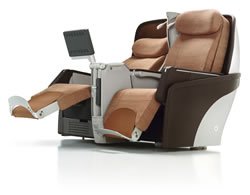 seats convertible into beds of 190 cm long with massage function and all an array of amenities and utilities for business trips: armrest, leg rest and adjustable headrests, individual lights, adjustable touch screen 10.4''individual, individual satellite phone, laptop, email, SMS, 26 video channels and 15 audio ... Just as a self-service bar area, updating designs and materials (upholstery, blankets, toiletries ...) and other privileges. The investment exceeds one hundred million euros.
However, if you are critical of the measures, anyone can grasp that this is not any counter-attack but simply Iberia assumed its inability to compete with low cost companies and is resigned to specialize in long-haul and high net worth clients.
 seats convertible into beds of 190 cm long with massage function and all an array of amenities and utilities for business trips: armrest, leg rest and adjustable headrests, individual lights, adjustable touch screen 10.4''individual, individual satellite phone, laptop, email, SMS, 26 video channels and 15 audio ... Just as a self-service bar area, updating designs and materials (upholstery, blankets, toiletries ...) and other privileges. The investment exceeds one hundred million euros.
 However, if you are critical of the measures, anyone can grasp that this is not any counter-attack but simply Iberia assumed its inability to compete with low cost companies and is resigned to specialize in long-haul and high net worth clients.
Iberia has not only launched the price war , but more recently it has decided to join the low cost. After starting talks with Iberostar last January to jointly participate in the creation of a new low cost airline, on 26 April revealed details on the alliance to be carried out and that would have a powerful base of operations in Barcelona. According to Angel Muller, CEO of Iberia, the official launch of the project could occur later this year or early 2007. However, the main low cost companies predict the failure of this project.
In one of the most important times for the sector-Easter- a further rise of oil prices has been noted on the tickets. These have been increased the amount since the airlines have decided to pass on the increase as aforesaid. Thus, Iberia and Spanair have included a charge of 10 euros on domestic routes, Iberia has increased the existing rate of 10 euros on domestic flights as part of an international connection to 15 euros, two more (to 60) on intercontinental flights, keeping only the rate of European flights by 20 euros. Air Europa has increased the price of its domestic routes 9 and 56 euros in the Intercontinental, plus a surcharge of 10 euros if the flight makes a stop in Madrid.
A week later, the airline is expanding the surcharge (between 10 and 20 €) to the European routes, while Air Europa and Iberia declare that they plan to revise the price of their tickets to the upside, at least "with immediate effect" .
On 21 April the British English Airways said it would increase the fuel surcharge for tickets at 5 pounds, 35 pounds to reach the long distance path and maintain the 8-pound fee on short flights. With this, the airline's commercial director Martin George
, estimated up the bill this fiscal year to 2,200 million pounds, instead of the originally planned 2,000 million. George said that with the current oil prices (above $ 70 a barrel) in fuel costs would amount to 1,600 million pounds, making it necessary for both the increase of the supplement.
in Spain and Europe's low cost carriers now account for 20% of the share market. It then presents a list of the leading European flights by offering seats in 2005:
1 º RyanAir with 40,039
2 º Easyjet with 35,829
3 º Air Berlin with 17,261
4 th Air One with 7,539
5 º Eurowings with 6,709
6 º Meridiana 6212
7 º Deutsche BA in 5757
8 º Flybe to 5,408
9 º Bmibaby with 5,098
10 º Sterling 5,046
11 º Hapag-Lloyd Espress with 4,444
12 º Norwegian Air Schuttle with 4,156
13 º Transavia with 3,670
For Spain, Iberia controls a 51% share, behind, Spanair and Air Europa with 20 and 13% respectively.
Bibliography: Expansion Journal
http://www.elblogsalmon.com/
http://grupo.iberia.es/
, estimated up the bill this fiscal year to 2,200 million pounds, instead of the originally planned 2,000 million. George said that with the current oil prices (above $ 70 a barrel) in fuel costs would amount to 1,600 million pounds, making it necessary for both the increase of the supplement.
in Spain and Europe's low cost carriers now account for 20% of the share market. It then presents a list of the leading European flights by offering seats in 2005:
1 º RyanAir with 40,039
2 º Easyjet with 35,829
3 º Air Berlin with 17,261
4 th Air One with 7,539
5 º Eurowings with 6,709
6 º Meridiana 6212
7 º Deutsche BA in 5757
8 º Flybe to 5,408
9 º Bmibaby with 5,098
10 º Sterling 5,046
11 º Hapag-Lloyd Espress with 4,444
12 º Norwegian Air Schuttle with 4,156
13 º Transavia with 3,670
For Spain, Iberia controls a 51% share, behind, Spanair and Air Europa with 20 and 13% respectively.
Bibliography: Expansion Journal
http://www.elblogsalmon.com/
http://grupo.iberia.es/


 These needs form a pyramid at whose base are physiological needs. These are the first priority of individuals and are related to survival, would be food, water, air, rest, shelter ... Once these basic needs, people would worry about the security of keeping the lows and not feel threatened by environmental circumstances. After this step would be the social acceptance, which refers to social needs and the feeling of belonging to a group. Is associated with emotional relationships and the need for love and affection. The fourth step is composed of self-esteem needs, ie the feeling of being respected and have the confidence and the estimation group others in the form of reputation, social status, recognition or importance. Finally, at the top, would the needs of self, that is, the desire of individuals to perform to their full potential.